From Hospital Corridors to Village Halls: Ten Servicemen and Women Who Rebuilt More Than Themselves
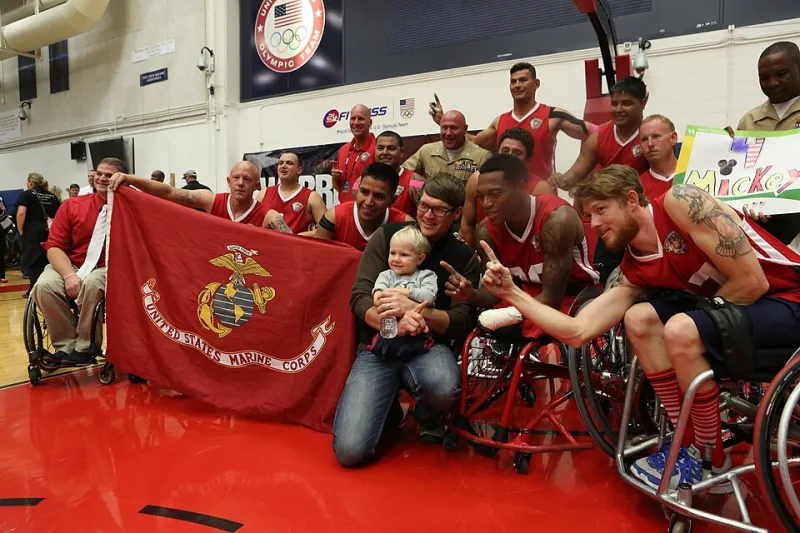
Photo: Lance Cpl. Carson Gramley, Public domain, via Wikimedia Commons
There is a moment, familiar to many who have passed through a military rehabilitation ward, when the question shifts from Will I walk again? to What will I do with the life I have? For the ten veterans profiled below, that question became a calling. Their ventures vary enormously — a wheelchair rugby club in the Midlands, a fishing charity on the Norfolk Broads, a suicide-prevention helpline run from a converted shed in Fife — but they share one thread: each founder turned personal recovery into public service.
The Rugby Club That Started in a Car Park
Former Royal Engineer James Callaghan lost his left leg above the knee following an IED strike in Afghanistan. His turning point, he says, came not in surgery but in a Selly Oak hospital car park, where a nurse mentioned a local amputee football session. Today, his club in Walsall fields three teams and welcomes civilians and veterans alike. "Rehab gave me my leg back," he jokes. "The club gave me my reason."
Supporters can volunteer as match-day marshals or sponsor kit — roles that require no sporting background whatsoever.
A Quiet Room in Fife
Not every wound is visible. Former RAF medic Eilidh Fraser battled post-traumatic stress disorder for six years before converting her garden shed into a drop-in listening room for veterans in Fife. What began with a kettle and two chairs now handles more than forty visits a week, staffed by trained peer supporters. Her advice to would-be organisers is characteristically blunt: "Don't wait for permission. Put the kettle on and open the door."
Ten Journeys, One Pattern
The remaining eight stories follow a similar arc:
- Arthur Mensah, Army, founded a Portsmouth-based employment charity after being medically discharged, now placing veterans with regional employers.
- Cathy O'Donnell, Royal Navy, established a family respite caravan scheme in North Wales after her husband's stroke.
- Dev Rana, Royal Marines, launched a veterans' cycling group that has since pedalled from Land's End to John o' Groats three times.
- Gordon Whitfield, Army, turned allotment therapy into a network of twelve community gardens across Yorkshire.
- Hannah Pryce, RAF, created a mental-health first-aid training programme now delivered in schools and workplaces.
- Idris Khan, Army, founded a veterans' choir in Birmingham that performed at the Festival of Remembrance.
- Megan Lloyd, Royal Navy, built a coastal walking group in Pembrokeshire tackling isolation among older veterans.
- Tom Brackley, Army, converted a disused barn into an adventure-resilience centre for wounded personnel and their children.
What Each Turning Point Had in Common
Ask any of the ten about the moment their recovery changed direction, and the answers converge. Not one cites a medical milestone. Instead, they describe being needed — a request for help, a knock on the door, a fellow veteran who had nowhere else to turn. Purpose, it seems, is a form of medicine.
How You Can Start Something Similar
Every initiative above began modestly: a shed, a car park, a caravan. If you are a veteran — or simply someone who wants to stand beside those who stood for us — the first steps are the same:
- Identify the gap. What does your town lack? A listening service, a sports session, a garden?
- Find one ally. Every founder above began with a single co-conspirator.
- Seek guidance. Established charities, including ours, offer mentoring for new veteran-led projects.
- Start small and stay consistent. A weekly session with six attendees outlasts a grand launch nobody returns to.
Their recoveries became missions. With a little encouragement, yours — or your neighbour's — could too.