Spokes, rivets and second chances: inside the dockyard benches where veterans are restoring more than relics
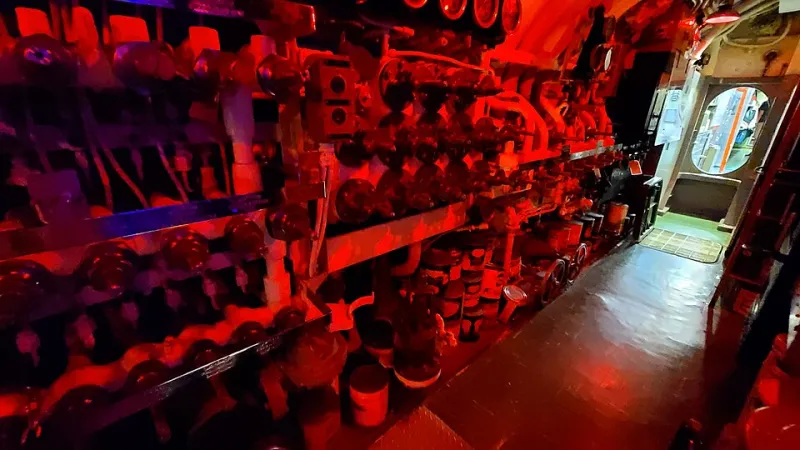
Photo: Eric Friedebach, CC BY 2.0, via Wikimedia Commons
The smell of oil and history
There is a particular sound in the workshops that line Britain's historic dockyards — the soft rasp of wire wool on brass, the click of a spoke key, the low murmur of two people talking without needing to make eye contact. In Portsmouth, a short walk from the Mary Rose's gleaming hull, and in Chatham, beneath the weathered timbers of the historic dockyard itself, veteran-run restoration workshops are bringing forgotten objects back to life. Along the way, they are doing the same for the people holding the tools.
The premise is disarmingly simple. Ex-service personnel — many of whom left the Forces carrying injuries, both visible and unseen — gather two or three days a week to restore whatever the workshop has taken in. A 1943 roadster bicycle with a bakelite lamp. A ship's sextant crusted with salt. A signal lamp from a decommissioned frigate. Each item is catalogued, dismantled, cleaned, repaired and returned to working order, often for display in local museums, regimental associations or service charities.
Structure you can hold in your hands
For those who have spent years navigating the disorientation that can follow service — rehabilitation after injury, the loss of routine, the search for a reason to get up in the morning — the workshop offers something rare: structure you can physically hold.
'In the Navy, your day was ruled by the pipe, the watch bill, the routine,' says one volunteer, a former engineering technician who asked not to be named. 'When that goes, the days go soft at the edges. Here, there's a job on the bench and it's mine until it's done. That's not a small thing.'
Occupational therapists have long recognised the value of purposeful, repetitive craft work in recovery. The fine motor skills demanded by restoring a bicycle's Sturmey Archer hub or re-lacing a wooden ship's block mirror the dexterity exercises prescribed in rehabilitation programmes — but with an outcome that matters to someone. The bicycle will be ridden again. The artefact will be seen again. The work is not therapy disguised as a task; it is a task that happens to heal.
An apprenticeship in things nearly lost
What began as a recovery project has grown into something the workshops' founders did not entirely anticipate: a school. Around the benches, older veterans with dockyard apprenticeships behind them — many trained in trades that no longer exist in Britain at scale — are passing on skills to younger ex-servicemen and women, and increasingly to local cadets and college students on placement.
Sail-making stitches. Riveting. The patience to true a wheel by hand rather than reach for a machine. These are endangered competencies, kept alive in a handful of heritage yards and, now, in these volunteer-led spaces. 'If I don't show the next one how to do a proper splice, it goes with me,' one Chatham volunteer explains. 'That's not sentiment. That's just the truth of a craft.'
The intergenerational exchange cuts both ways. Younger volunteers bring digital skills — cataloguing software, social media, 3D printing for replica parts — while older hands supply the judgement that no manual provides: how hard to tap, when to stop, what 'right' feels like.
More than a workshop
The objects themselves carry weight. A wartime bicycle is not merely a machine; it is a story about rationing, ingenuity and the home front. Restoring one becomes an act of remembrance that is active rather than ceremonial — a way of honouring service with your sleeves rolled up.
Several pieces restored by the Portsmouth group have gone on display in regimental museums and at remembrance exhibitions around Hampshire and Kent. Others are donated to forces families or sold at fundraising events, with proceeds channelled back into veteran welfare programmes. The bench, in other words, feeds the wider mission of support that organisations like ours exist to champion.
Standing beside those who stood for us
There is a lesson in these dockyard workshops for all of us who support the Armed Forces community. Recovery is rarely a single dramatic moment; more often it is a long, patient rebuild — spoke by spoke, rivet by rivet. What veterans need is not pity but purpose, and a place where their skills, discipline and quiet pride are put to work.
The benches of Portsmouth and Chatham remind us that service does not end at discharge. It simply changes shape. And with the right support — a workshop, a mentor, a task worth doing — the men and women who stood for us can continue to stand for something still.
If you would like to support veteran rehabilitation programmes like these, whether through donation, fundraising or volunteering your own skills, visit our campaigns page. Every contribution helps keep a bench occupied — and a veteran moving forward.