Every Square a Story: The Nationwide Quilt Bringing Britain's Fallen Back Into the Light
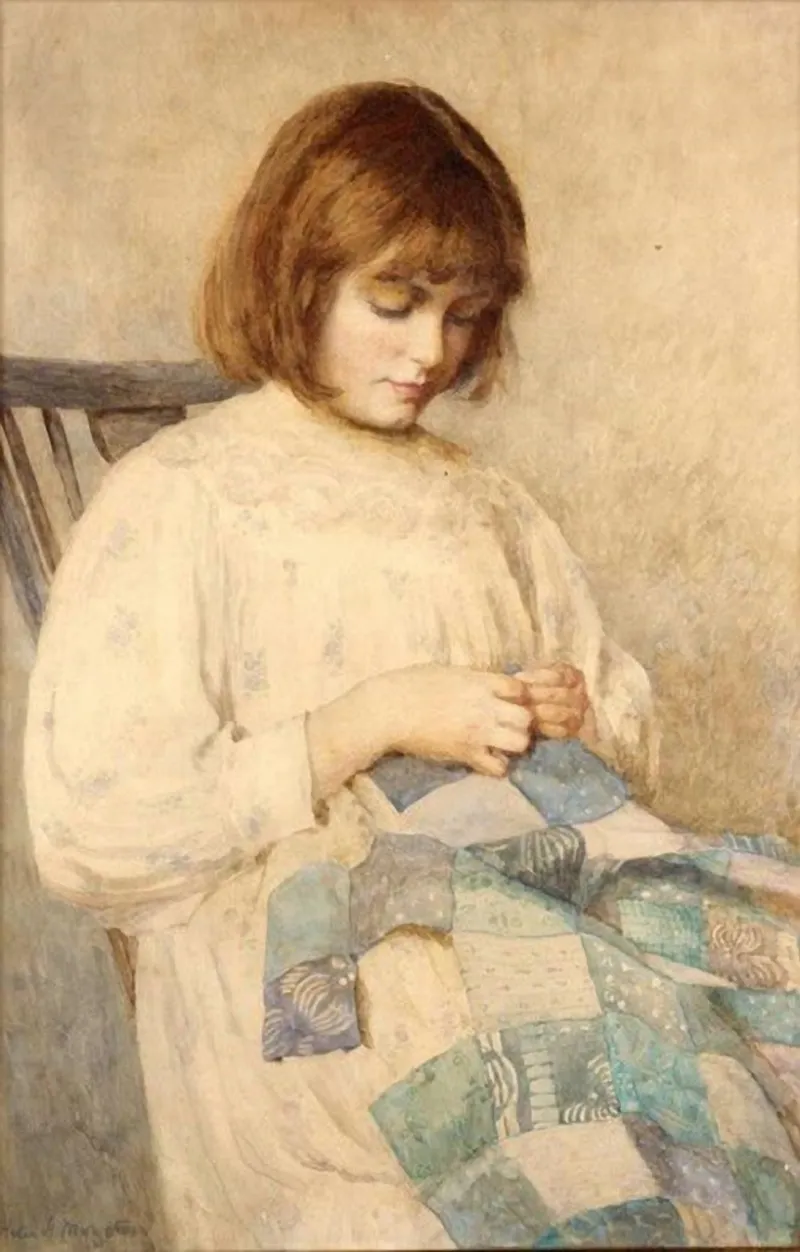
Photo: William Henry Margetson, Public domain, via Wikimedia Commons
In a church hall in Salisbury, the only sound is the steady rhythm of needles passing through fabric. Around a long trestle table sit eight women, some in their eighties, some barely thirty. Between them lies a growing patchwork of colour — poppies, regimental crests, a child's handwriting embroidered in blue thread. Each square remembers someone who served. Together, they are becoming one of the largest community quilts of remembrance Britain has ever attempted.
The project, known informally among its volunteers as the Great Muster, began with a simple idea: that grief shared is grief made bearable, and that a nation's memory can be held in something as humble as cloth.
A Widow's Patchwork, Forty Years in the Making
Margaret Ellison, 76, lost her husband in the Falklands in 1982. For four decades, she says, she carried his memory largely in silence.
"You learn to smile at the school gates and say you're fine," she explains, smoothing a square of tartan wool cut from her husband's old dress uniform. "Nobody really asks twice."
When a friend invited her to a quilting session at her local Royal British Legion branch, Margaret arrived expecting tea and small talk. Instead, she found herself surrounded by women who understood without explanation.
"I sat down with a pair of scissors and forty years came out," she says. "The lady next to me just passed me a tissue and kept sewing. That was the kindest thing anyone had done for me since 1982."
Her square — the tartan, a stitched Southern Cross constellation, and a single line of his handwriting reproduced from a letter home — now anchors one corner of the quilt's Falklands panel.
Learning to Sew, Learning to Speak
Not every contributor arrives with decades of grief behind them. Sergeant Callum Reid, 34, served two tours of Afghanistan and had never threaded a needle in his life before joining a session in Catterick.
"I felt a bit of a fraud, sitting there with my ham-fisted attempts," he admits. "But the women in that room had buried husbands, sons, brothers. They weren't going to judge my running stitch."
Callum's square honours a comrade killed in Helmand in 2010 — a simple design of a red poppy against khaki, the stitching deliberately imperfect.
"I left the wonky bits in," he says. "He'd have laughed at me if it looked too polished."
For Callum, the act of sewing slowly became something closer to therapy. "You've got your hands busy and your guard down. Before you know it, you're saying things you've never told anyone."
From Kitchen Tables to Cathedral Walls
What began as scattered kitchen-table sessions has grown into a co-ordinated national effort. Volunteer co-ordinators — many of them ex-servicewomen themselves — collect squares from every corner of the country, from Penzance to Inverness, and assemble them into full quilts in regional hubs.
The finished pieces are then loaned out for public display. They have already hung in a cathedral in the North East, a children's hospital in Manchester, and a dozen primary schools around Armistice season, where pupils are invited to study the squares and ask questions.
"Children don't ask the polite questions adults do," says co-ordinator Denise Hartley, a former Army nurse. "They ask what happened to the person in the picture. And that's exactly the point. Families get to tell the story out loud, often for the first time in years."
Schools have reported that the visits spark remarkable classroom discussions about service, sacrifice and loss — lessons that no textbook quite delivers.
Craft as a Lifeline — and a Fundraiser
Beyond its memorial purpose, the project has become a quiet fundraising engine. Sponsorship forms, craft fairs and quilt-front exhibitions have raised thousands for veterans' welfare charities, including recovery programmes and respite breaks for forces families.
There is also growing recognition of craft itself as a therapeutic tool. Occupational therapists have long noted the calming, meditative effect of repetitive handwork — a small but meaningful companion to formal mental health support for veterans managing trauma.
"Nobody comes to a quilting circle to fix anything," says Denise. "But an awful lot of people leave a little lighter than they arrived."
One Nation, One Thread
The organisers' ambition is simple and enormous: a square for every community that has lost someone to service, with quilts displayed in every cathedral city in the UK by the end of the decade.
Margaret Ellison will be there when her panel is hung. She still finds it hard to talk about Charles, but she no longer finds it impossible.
"He's not in a photograph on a shelf anymore," she says. "He's in a room full of people, and they know his name. After all these years, that feels like something."
For the volunteers of the Great Muster, that is the true measure of the project. Not the thread count, not the exhibitions — but the conversations started, one square at a time, in halls and kitchens across Britain.
Those wishing to contribute a square, attend an exhibition or support the fundraising effort can find details through local Royal British Legion branches and veterans' welfare organisations nationwide.