A Chair, a Mirror and a Listening Ear: Inside the Barbershops Quietly Supporting Britain's Veterans
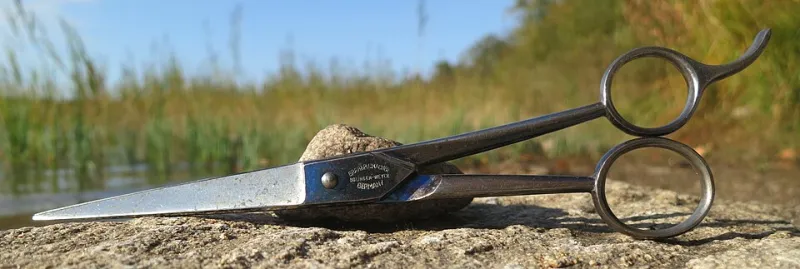
Photo: R. Henrik Nilsson, CC BY 4.0, via Wikimedia Commons
There is a particular kind of honesty that happens in a barber's chair. Perhaps it is the eye contact in the mirror, or the simple fact that someone is standing close by, listening without judgement, for twenty uninterrupted minutes. Whatever the reason, Britain's barbershops are becoming places where veterans say things they have never said aloud.
More Than a Trim
In towns from Wigan to Weymouth, a quiet movement has taken root. Barbers — many of them ex-forces themselves — are offering free or reduced-price cuts to veterans, and in doing so have found themselves on the front line of a different kind of service: spotting the signs of isolation, debt, PTSD and loneliness before they harden into crisis.
For charities working in this space, the value is obvious. Many former servicemen and women will never book a counselling appointment, let alone walk into a support centre. But they will come in for a haircut. The barbershop, with its long tradition of male camaraderie and unscripted conversation, offers something a clinical waiting room cannot: familiarity without pressure.
"They sit down, we talk about football, and then somewhere around the second or third minute, it changes," says one Portsmouth barber, a former Royal Engineer, who asked to be identified only by his first name, Dave. "They'll mention they've not been sleeping. Or that the wife's been on at them to get out of the house. You don't need a qualification to notice something's not right. You just need to listen."
A Tradition of Camaraderie
The barbershop has always been more than a place to get a haircut. For generations, it has been a communal space — a place for banter, debate and the kind of casual company that men, in particular, can find difficult to arrange elsewhere. For veterans adjusting to civilian life, that matters. The structure of military routine disappears on discharge, and with it, the daily contact that kept loneliness at bay.
Several shop owners have formalised their efforts, partnering with local veterans' charities to display signposting cards by the till or to hold dedicated veteran mornings, where former servicemen can come in for a free cut, a cup of tea and, crucially, the company of others who understand.
From Small Talk to Real Support
What begins as small talk can become something far more significant. Barbers in the network describe customers who have disclosed thoughts of self-harm mid-cut, or who have quietly mentioned that they are sleeping rough. In response, many shops now keep contact details for veterans' mental health services to hand, and some owners have completed basic mental health first aid training.
The approach is deliberately low-key. There are no posters demanding disclosure, no formal intake. The philosophy is simple: be a familiar face, ask the second question, and know where to point someone when they need more than a haircut.
"I'm not a therapist," Dave says. "But I can be a bridge. I can say, 'Look, I know a bloke who's been through the same thing — shall I give him your number?' Nine times out of ten, they say yes."
Standing Beside Those Who Stood for Us
For Help For Heros, these shops represent something at the heart of our mission: recovery does not always begin in a hospital or a support centre. Sometimes it begins with a £12 haircut and a conversation that a man has been putting off for years.
The veterans who pass through these shops are not case studies. They are neighbours, fathers and former colleagues — people who served, and who now deserve a community that serves them in return. If a barbershop in a quiet high street can be the place where a struggling ex-serviceman first says the words he has carried for a decade, then that shop deserves our recognition, and our support.
So the next time you pass your local barber and see a small sticker in the window — Veterans welcome, first cut free — know what might really be happening inside. It is not just grooming. It is early intervention, delivered one conversation at a time, in the most unassuming setting imaginable.
And it is proof that standing beside those who stood for us can begin with something as simple as a chair, a mirror and a listening ear.