Beyond the Silence: How Parish Remembrance Is Becoming a Year-Round Lifeline for Veterans
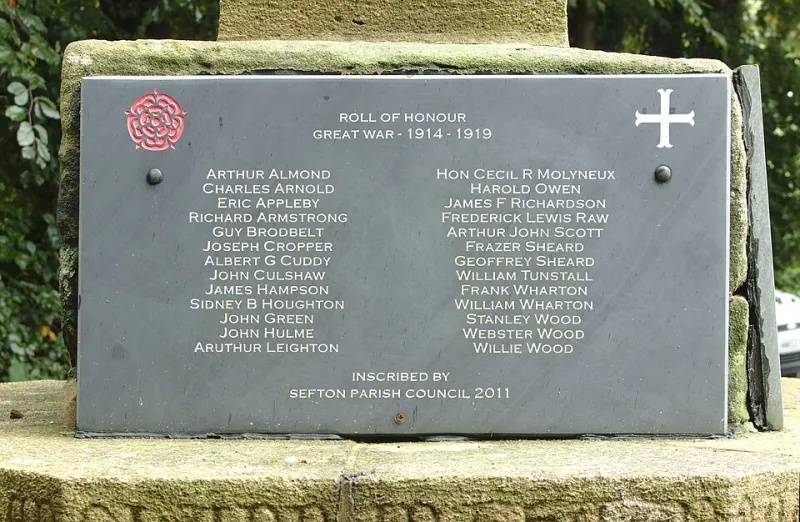
Photo: Rodhullandemu, CC BY-SA 4.0, via Wikimedia Commons
On the second Sunday of November, the residents of Netherbury in Dorset will gather, as they have every year since 1921, around their Portland stone memorial. Wreaths will be laid. The Last Post will sound. And then, as the congregation disperses, something rather new will happen: collection plates will circulate not for church funds, but for a veteran mentorship scheme that now runs the length of the parish calendar.
Netherbury is not alone. From the Pennines to the Norfolk coast, remembrance events are quietly evolving. The silence remains sacred — but what follows it is changing shape.
From Wreaths to Welfare
The numbers behind village collections are more substantial than many assume. The Royal British Legion's Poppy Appeal, the largest of its kind, raises tens of millions of pounds annually, and a meaningful share of that total originates from small-town street collections and parish gate donations. Yet for decades, much of this money flowed into national pots, with local veterans sometimes unaware where their neighbours' coins had travelled.
A growing number of parishes are now asking a different question: what if the money raised at the memorial stayed close to the memorial?
In Netherbury, the answer has taken the form of a befriending and mentorship programme pairing recently discharged personnel with older veterans — men and women who understand the particular difficulty of a quiet Tuesday morning in civilian life. The scheme costs roughly £4,000 a year to run. The Armistice collection covers most of it.
Three Parishes, Three Approaches
In Hebden Bridge, West Yorkshire, the remembrance committee took a more entrepreneurial route. Rather than relying solely on the November collection, the parish now hosts a spring concert and a summer open-garden trail, with proceeds ring-fenced for transport costs that get isolated veterans to medical appointments and social gatherings. The committee's treasurer, a retired Royal Engineer, describes the model without sentimentality: "The silence is for them. The fundraising is for us to do something."
Further north, in a former mining village outside Durham, the approach is more direct still. There, the memorial trust has converted a disused scout hut — purchased with three years of accumulated Armistice donations — into a drop-in centre offering tea, advice surgeries, and a weekly Employment Support session run in partnership with a regional careers charity. Attendance, organisers say, doubled after the local Jobcentre began signposting veterans to the hut directly.
Three parishes, three methods, one shared conviction: that the communities which lost the most should be the first to offer help.
The Two-Minute Economy
Could the act of remembrance become the most productive fundraising moment in the British calendar? Some in the sector believe it already is, or close to it. No other annual event combines nationwide participation, genuine emotional engagement, and an established tradition of giving quite so efficiently. The two-minute silence functions, in practical terms, as a moment of collective attention — and attention, as any fundraiser will tell you, is the scarcest commodity there is.
Critics, of course, urge caution. There is a legitimate concern that too vigorous a fundraising apparatus around Remembrance could feel transactional, cheapening the solemnity that gives the occasion its power. The parishes we spoke to were emphatic on this point: the collection comes after the silence, never during it, and nobody is pressed to give. One organiser put it plainly: "We are not selling poppies at the memorial. We are giving people a way to act on what they feel."
A Model Worth Studying
For national charities, the parish model offers lessons worth heeding. Local fundraising rooted in genuine community memory tends to be more resilient than centrally driven appeals; the donors know the recipients, or at least know their street. And the money, kept local, produces visible results — a hut, a minibus, a cup of tea and a conversation — that donors can see with their own eyes.
Help for Heroes' own community fundraising network has long recognised this dynamic, with regional events and local partnerships forming the backbone of recovery support across the UK. The village memorials are, in a sense, doing what the sector has always hoped communities would do: turning feeling into action.
As November approaches, the wreaths will be laid as they always are. The silence will hold, as it always does. But in Netherbury, Hebden Bridge and countless parishes besides, what happens in the minutes afterwards may matter more than ever — a quiet, distinctly British revolution in how a nation cares for those who served it.
If you would like to support veteran recovery programmes in your community, or to find out whether a local scheme exists near you, visit our fundraising pages or contact your parish council.