Spare Change, Reimagined: Is Round-Up Giving the Future of Supporting Our Veterans?
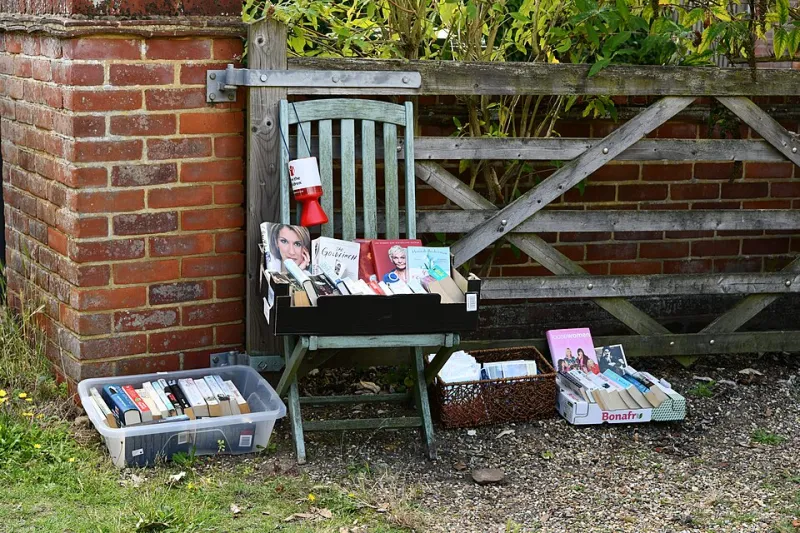
Photo: Michael Garlick , CC BY-SA 2.0, via Wikimedia Commons
Somewhere between the meal deal and the self-service till, British generosity has been quietly redesigned. Buy a sandwich in a chain café and a screen may ask if you'd like to add 30p for service personnel. Settle a round in a pub app and a prompt offers to round up your £12.40 to £13. Book a ferry crossing, a train ticket, a hire car — the tick-box is there, waiting.
This is round-up giving, and it has become one of the most significant shifts in charitable fundraising in a generation. The question for the Armed Forces charity sector is whether it represents a revolution in support or a dilution of it.
The Case for the Small Ask
Ask publicans and shopkeepers why they sign up, and the answer is rarely sentimental. It is arithmetic. A prompt at the till converts at a rate no street collection could dream of, because it arrives at the precise moment a purchase is already being made — no wallet needs opening, no signature required.
Margaret Osei, who runs a convenience store in Salford, added a round-up option for a forces charity last spring. "People who'd never put a pound in the tin were adding 20p without blinking," she reports. "By Christmas we'd raised over nine hundred quid. I've got a collection tin by the door that took four years to reach half that."
Fundraisers in the veterans' sector make a related argument: micro-donations recruit supporters who would otherwise never engage. Someone who rounds up once may, months later, take part in a sponsored march, buy a raffle ticket, or leave a gift in a will. The 30p is not the point; the relationship is.
There is also a cultural argument. Britain's connection to its servicemen and women is broad but shallow — most people feel loyalty without knowing how to express it. Round-up giving offers a frictionless expression of something people already feel. In that sense, it does not manufacture generosity; it harvests it.
The Case Against the Tick-Box
Sceptics, including some seasoned fundraisers, are not so sure. Their concern is what behavioural economists call moral licensing: the suggestion that a small, effortless act can satisfy a larger obligation. If rounding up 40p on a petrol station meal deal counts as supporting veterans, what pressure remains to attend the Remembrance parade, volunteer at the branch, or understand the housing and employment crises many veterans actually face?
There is a quieter worry, too — about transparency. Shoppers frequently assume the retailer is donating, when in fact it is the customer's money. Others wonder how much of their round-up reaches the front line after processing fees and platform costs. Charity regulators have noted growing public confusion about till-side giving, and several veterans' charities now publish plain-English breakdowns of where every penny goes precisely to counter it.
Critics also point to a subtler erosion: the transformation of giving from an act into a setting. Philanthropy chosen deliberately — a standing order, a sponsored walk, a legacy — builds identity and commitment. Philanthropy accepted by default builds, at best, habit, and at worst, indifference dressed as virtue.
A Complement, Not a Substitute
The most persuasive voices in this debate refuse the either/or. Frank Delaney, a Royal Navy veteran who now fundraises in Devon, puts it this way: "I'll take the 20p from the man who'll never come to a fundraiser, and I'll take the Saturday from the woman who collects outside the Co-op. One pays the heating bill. The other keeps the whole thing alive."
That, arguably, is the honest answer. Round-up giving is a broad, shallow river — enormously useful, but not deep enough to carry the sector alone. The depth still comes from the old-fashioned sources: volunteers, events, legacies, and the patient work of explaining veterans' needs to a public that would rather not think about them.
So the next time a till asks whether you'd like to add 30p, say yes — and then consider whether that's where your support should end. The tick-box is a doorway. What matters is whether anyone walks through it.