Rations on the Home Front: How Ex-Servicemen Are Fighting Hunger in Their Own Ranks
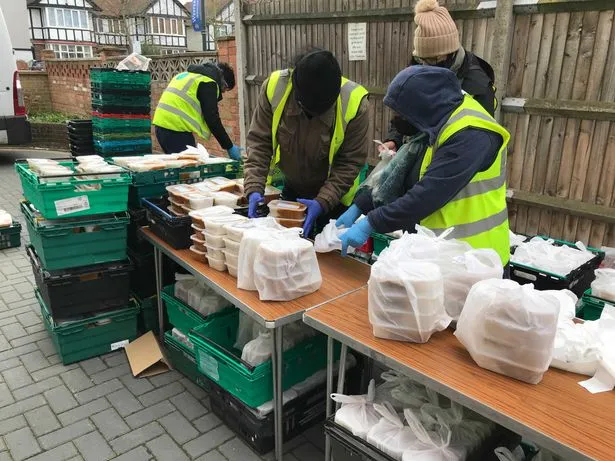
Photo: volunteers serving hot food at community kitchen UK, via i2-prod.mylondon.news
The queue outside the former Territorial Army centre in Salford forms early, even in the rain. There is little chatter, but plenty of recognition. One man in a fleece embroidered with a regimental crest nods to another; a woman who served in the Royal Logistic Corps hands out tea from an urn she brought from home. This is not a soup kitchen in any conventional sense. It is, in the words of the man who founded it, 'the regiment carrying on — just without the uniforms.'
A Crisis Hiding in Plain Sight
Food poverty among veterans is a subject few in the forces community like to name, yet the evidence keeps accumulating. Charities working with ex-forces families report a marked rise in demand over the past three years, driven by a familiar combination of rising rents, insecure employment after service, delayed benefits payments and, for some, the long tail of physical and psychological injury that makes steady work difficult to hold down.
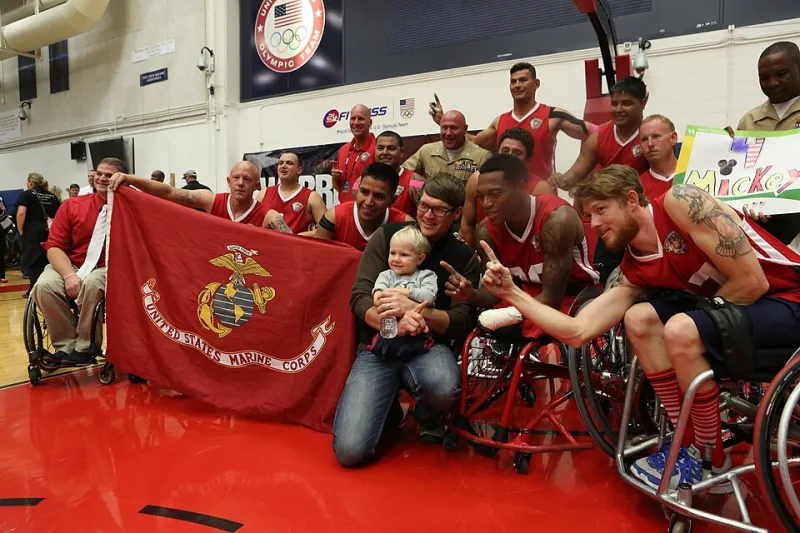
What surprises many is who is standing in the queue. Alongside those with visible wounds of service — the amputees, the men still wrestling with what they saw on operations — are former corporals in their fifties who left the Army two decades ago and simply never found their footing in civilian employment. There are widows of veterans, entitled to support they did not know existed. There is a former Royal Navy chef, now feeding the very community he once catered for at sea.
'It is not about being unable to boil a potato,' one volunteer tells us, only half-joking. 'It is about pride. Most of these people would rather go hungry than ask for help. That is why we do it this way.'
The Way They Do It 'This Way'
That way is, unmistakably, military. Orders of march are replaced by rotas. Kit inspections become stock checks, conducted at 07:30 sharp. Donations are logged with the same meticulousness once reserved for ammunition returns. At the Portsmouth kitchen, run from a converted unit near the dockyard, the weekly delivery of surplus produce from supermarkets and wholesalers is received like a resupply — checked, signed for, and distributed with drill-like efficiency.
But the discipline is only half the story. The other half is the thing the Ministry of Defence could never issue: belonging. Veterans who arrive as clients frequently leave as volunteers, once they have eaten a few hot meals and remembered what it feels like to be among people who understand. Nobody here needs an explanation of why a man flinches at fireworks, or why he cannot bear to be idle. Nobody asks twice.
Why the Need Is Growing
Charities point to several converging pressures. The transition from service to civilian life remains, for a minority, perilous — and the number of people leaving the forces with pre-existing mental health conditions has not fallen. The cost-of-living crisis has eroded the savings that once cushioned a difficult first few years out of uniform. Service families relocated on posting after posting often lack the local networks — family, friends, longstanding employers — that others rely upon when things go wrong.
There is also a stubborn stigma problem. Research by service charities has repeatedly found that veterans are among the least likely groups to seek welfare support, viewing charity as a last resort rather than a right. Food banks run by veterans, for veterans, deliberately lower that threshold. The queue at Salford includes men who would never cross the threshold of a conventional food bank but will happily turn up for a 'regimental breakfast'.
How You Can Help
These operations run on remarkably little and achieve a remarkable amount. A recurring donation of £10 a month to a veterans' food initiative keeps a family in provisions for a week. Supermarket vouchers, tinned goods and long-life milk are accepted at collection points across the country, and many branches of mainstream food banks now work in partnership with forces charities to identify veterans discreetly and signpost them without ceremony.
Employers, too, have a part to play. Several of the men and women we met were not out of work through any failing of their own; they needed an employer willing to look past a gap on a CV and see a person who had led a section, managed logistics under fire, or kept a warship's kitchen running for six months at a time.
Standing Beside Those Who Stood for Us
At the end of the morning in Salford, the volunteers pack away the tables, count the stock and lock the container. The founder — a former Warrant Officer who asked not to be named — pauses at the door. 'Nobody who served this country should be wondering where their next meal is coming from,' he says. 'While we have breath in us, that won't happen on our watch.'
It is a sentiment that captures precisely why Help For Heros exists. Those who stood for us should never stand alone — and, in kitchens and halls from Salford to Portsmouth, they no longer have to.