When the Pager Replaces the Parade: The Veterans Answering Britain's Night-Time Calls
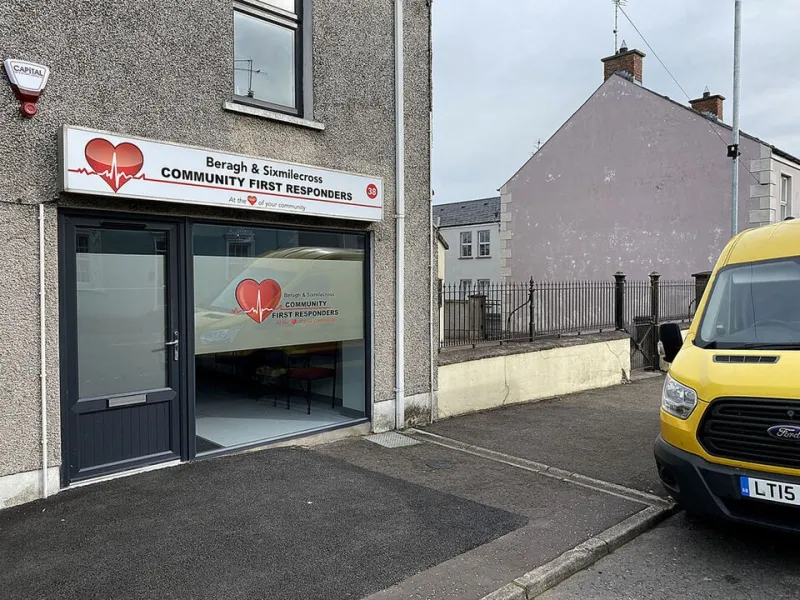
Photo: Kenneth Allen , CC BY-SA 2.0, via Wikimedia Commons
At 2:47 on a Sunday morning, the mobile phone on Mark Ellison's bedside table erupts. Within four minutes he is dressed, boots on and walking briskly towards his car, a green holdall slung over one shoulder. His wife barely stirs; she has long since stopped counting these nights. Twelve minutes later, Mark is kneeling beside a pensioner in cardiac arrest on a cul-de-sac in Wiltshire, his hands working in rhythm, his voice steady, his training doing precisely what it was designed to do.
Mark served twenty-two years in the Army. Today, he is a community first responder — one of a quiet, growing army of veterans across the United Kingdom who have discovered that the skills the military gave them do not retire when the uniform does.
A Second Calling, Not a Second Choice
The statistics, though patchwork, tell a compelling story. Ambulance trusts across England, Scotland and Wales report that former armed forces personnel are significantly over-represented among community first responder volunteers — the trained laypeople dispatched to life-threatening emergencies ahead of a paramedic crew. The RNLI, whose lifeboat stations line the coasts of Cornwall to the Moray Firth, has long noted the same pattern among its volunteer crew. So too have the flood rescue teams that have become an increasingly familiar sight in the Somerset Levels, the Yorkshire Dales and the streets of Cumbria.
The reasons are not difficult to trace. Military service instils calm under pressure, disciplined communication, an instinctive respect for command structures and a comfort with kit, drills and darkness. When the pager sounds at three in the morning, a veteran does not panic. A veteran acts.
"You don't join for the excitement," Mark tells us, weeks later, over tea in a village hall that doubles as his responder group's training base. "You join because somebody once ran towards the noise for you, and it feels right to return the favour. That's all service ever was, in the end."
The Anatomy of a Night Call-Out
A community first responder's kit is modest: a defibrillator, oxygen, a bag of dressings, a torch. But the discipline behind it is anything but. Responders complete rigorous training, requalify regularly, and must maintain a response time that can mean the difference between life and death in rural Britain, where an ambulance may be twenty minutes away and the heart stops in four.
It is precisely this kind of mission-critical volunteering — structured, tested, consequential — that veterans describe as restorative. For those navigating the transition to civilian life, and particularly for those carrying physical or psychological wounds, the emergency services offer something rare: a role in which their past is not an explanation they must give, but a qualification they already hold.
Dr Sarah Whitcombe, an occupational psychologist who works with transitioning personnel, puts it plainly: "Recovery is rarely about rest alone. It is about purpose. When a veteran takes the helm of a lifeboat or answers a night call, they are not escaping their past — they are redeploying it."
From Battlefield to Boatshed
At a lifeboat station on the North Yorkshire coast, we meet Chief Coxswain's deputy Rachel Munro, a former Royal Navy medic who joined her local RNLI crew three years after leaving the service. The sea, she says, asked nothing of her past and everything of her present.
"On a shout, nobody asks where you've been. They ask if you can hold a line, read the water, keep your head. The boat doesn't care about your discharge papers. That's a kind of peace, actually."
Rachel's story is mirrored in the swiftwater rescue teams of the flood-stricken North, where ex-sappers and Royal Marines train alongside firefighters and farmers, and in the volunteer responder schemes now operating from Shetland to Sussex. In each case, the pattern repeats: military competence, repurposed; military camaraderie, rediscovered; military purpose, renewed.
Are the Emergency Services the New Career Destination?
Beyond volunteering, there is a broader shift underway. The NHS and ambulance services have become among the largest employers of ex-forces personnel in the country, with structured resettlement pathways, guaranteed interview schemes and clinical apprenticeships designed specifically for those leaving uniform. The Ministry of Defence's Career Transition Partnership has reported a steady year-on-year rise in leavers entering emergency services roles — as paramedics, call handlers, coastguards and fire officers.
For a generation of veterans seeking meaning after service, the appeal is structural as much as emotional: shift patterns that suit those who struggle with routine, a culture of teamwork that mirrors regimental life, and work that matters before breakfast.
"I left the Army worried I'd spend my life explaining myself at job interviews," says Mark. "Instead, I found an organisation that looked at my record and said, 'Right — when can you start?'"
Standing Beside Those Who Stood for Us
At Help For Heros, we see this movement as one of the most hopeful stories in the veterans' sector. Every responder who answers a night call, every crew member who launches into a winter gale, every flood volunteer waist-deep in a Swale street is living proof that service does not end at discharge — it simply changes uniform.
Supporting that transition — through funding, recognition and practical help — is central to our mission. Because when those who stood for us choose to stand for their communities once more, the very least we can do is stand beside them.
Mark, for his part, has no plans to slow down. His pager sits charged by the bed. Somewhere in his village, someone's worst night is coming, and he will be there in twelve minutes.
"People ask if it's draining," he says, pulling on his boots. "It's the opposite. It's the first thing in years that's made me feel exactly the right size."