When the Phones Never Sleep: A Night on Britain's Veteran Crisis Line
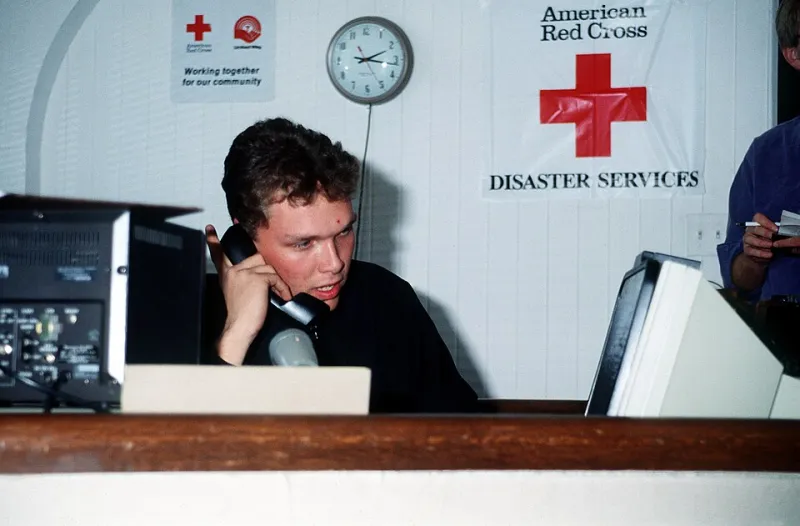
Photo: Department of Defense. American Forces Information Service. Defense Visual Information Center. 1994, Public domain, via Wikimedia Commons
At 2:14 on a Tuesday morning, the phone in a modest office above a community centre in the West Midlands rings for the fourth time that night. The volunteer who answers it — a former Royal Engineer who asks to be called only by his first name, Dave — glances at the caller display, takes a breath, and speaks four words that have become the quiet signature of Britain's veteran overnight lines: "Where did you serve?"
Not "How are you?" Not "What's the matter?" Those questions, veterans on both ends of these calls will tell you, come later — and only after the caller has decided that the voice on the other end is one worth trusting.
The Hours Nobody Else Wants
The overnight phoneline movement has grown steadily over the past decade, filling a gap that daytime services have long acknowledged but struggled to close. Crisis, as any clinician will attest, does not keep office hours. For veterans — many of whom served through nights on patrol, on watch, or on the flight line — the small hours can be when memories press hardest and the walls of routine feel thinnest.
The lines are staffed almost entirely by volunteers who have themselves served, supported by formal partnerships with clinical services to which urgent cases can be escalated. Calls range from the desperately urgent to the quietly mundane: a widower in Portsmouth who cannot sleep on the anniversary of a lost shipmate; a young leaver in Catterick who has not spoken to another human being in nine days.
"We get the lot," Dave says, during a lull between calls. "And that's the point. There's no triage at half two in the morning. There's just whoever rings, and us."
Why the Uniform Still Matters
The question researchers and charities have asked for years is why some veterans will speak openly to a fellow veteran when they will not speak to a GP, a counsellor, or even family. The answer, repeated almost word for word by every volunteer we spoke to, is one of translation.
"I don't have to explain what a stag night was — and I don't mean the sort with an inflatable sheep," says Mo, a former Army medic with eleven years on the phones. "I don't have to explain why you didn't sleep before a deployment, or why a certain smell stops you in a supermarket aisle. The caller doesn't spend twenty minutes building the scaffolding before they can say what's actually wrong."
That shared shorthand is not a substitute for professional care, and every volunteer is emphatic on that point. Training — typically upwards of sixty hours before a volunteer takes their first solo call — covers active listening, safeguarding, and the boundaries between peer support and therapy. What the line offers is a bridge: a human voice that understands, at 3 a.m., when nothing else is open.
One Night, Fourteen Calls
Over the course of our night on the switchboard, the line took fourteen calls. One was escalated to the emergency services — handled with a calm, procedural care that spoke to months of drill. Several lasted under ten minutes. One, from a man in his seventies in the Scottish Borders, ran for over an hour and ended, as many do, not with a resolution but with an agreement: he would ring back tomorrow, and the night after if he needed to.
"People think the job is talking people off ledges," Dave says. "Sometimes it is. Mostly it's holding the phone while someone remembers they're not the only one awake."
The calls that keep volunteers coming back, Mo says, are rarely the dramatic ones. They are the follow-ups: the man from Catterick, six weeks later, ringing to say he'd enrolled at college. "You don't get to hear the endings often," she says. "When you do, that's the wage."
Standing Beside Those Who Stood for Us
For the charities that fund and coordinate these lines, the model is simple and stubbornly old-fashioned: trained ears, through the night, for those who served. It costs comparatively little. It saves, by the honest admission of everyone involved, more lives than anyone will ever be able to count.
At 5:40 a.m., as the first grey light edges over the Black Country skyline, the phone rings once more. Dave picks up, checks the display, and gives the small nod that means a regular caller. "Evening," he says, gently correcting himself with a tired smile. "Morning. I mean. How can I help?"
Somewhere on the other end of the line, a voice that had been alone all night is alone no longer. The shift ends at seven. It will begin again tonight — and tomorrow, and the night after — as it must, for as long as it is needed.