Sixty Seconds of Their Own: What Britain's Veterans Really Think About During the Silence
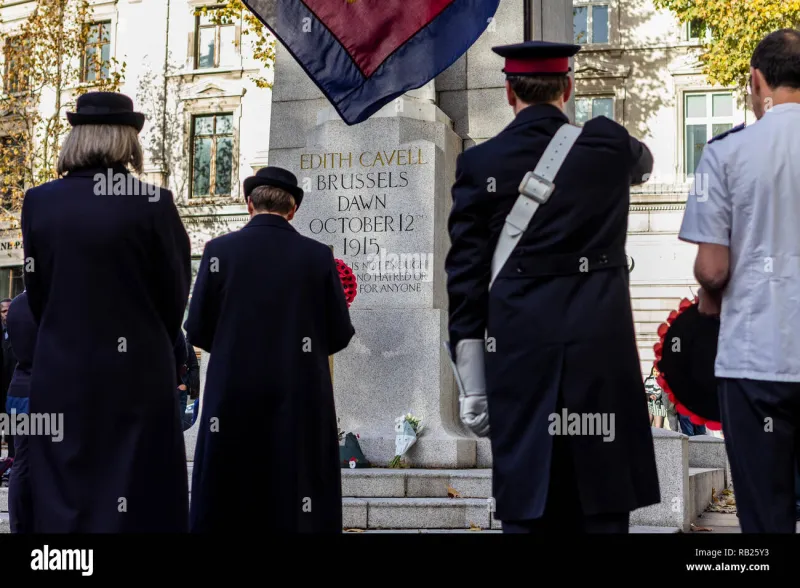
Photo: veteran standing quietly with head bowed wearing poppy remembrance sunday UK, via c8.alamy.com
At eleven o'clock on the second Sunday of November, Britain stops. Trains pause at platforms, shoppers fall still in supermarket aisles, and along Whitehall the crowd holds its breath. But within that shared hush, no two minutes are alike. For the men and women who wore the uniform, the silence is not an abstraction — it is populated. We spoke to veterans across the country about what they genuinely think about in those sixty seconds less, and their answers were more varied, more human and, at times, more surprising than any ceremony could suggest.
The Poppy Seller's Count
Margaret Ellison, 78, has collected for the Royal British Legion outside a chemist in Leeds for twenty-two years. A former WRAF telegraphist, she describes her silence as an inventory. "I go through them one by one," she says. "My brother. My father. The lad from our street who never came back from Aden. It's not sad, exactly. It's more like taking attendance. Somebody has to keep the register."
Her minute, she admits, usually runs short. "By the Reveille I'm on to the ones I only knew by nickname. I never get through everyone. I suppose that's rather the point."
A Marshal's Vantage Point
For those organising the parade, the silence is the one moment the job stops being logistics. Dave Okonkwo, 54, marshals the Remembrance parade in Croydon each year and served with the Royal Logistics Corps. "You spend the whole morning worrying about road closures and whether the standard-bearers have water," he says. "Then the Last Post sounds and suddenly you're eleven years old again, watching your grandad polish his medals."
His thoughts, he says, drift to the younger generation. "I look down the ranks now and I see lads just back from wherever, holding it together by their fingertips. I spend my two minutes hoping they've got someone to talk to in January, when the banners come down and nobody's watching anymore."
The Ones Who Stay Home
Not every veteran stands at a cenotaph. For a growing number, the public ritual has become something to be endured rather than embraced — and their private commemorations are no less sincere.
Rachel Tennant, 41, an Army veteran from Inverness, has not attended a formal parade since leaving service. "Crowds, uniforms, the expectation to look composed — it's a lot," she explains. Instead, she walks her dog to a loch side at eleven o'clock and reads a single name aloud. "One name. Every year it's a different one. It takes me thirty seconds. It's the truest minute of my year."
Researchers and welfare organisations have long noted that Remembrance season can be a difficult period for those living with trauma. The noise, the crowds and the weight of expectation can linger well into the darker weeks that follow. Recognising this, several local charities now offer quieter alternatives: small services in regimental chapels, woodland walks of remembrance, and phone lines staffed by fellow veterans for anyone struggling when the bugle sounds.
What the Silence Is Actually For
Historians remind us that the first two-minute silence in 1919 was conceived precisely as an act of individual reflection within a collective frame — a moment in which every grieving household in the country might, briefly, occupy the same stillness. A century on, that original intention holds. The silence does not demand a particular thought. It simply makes room for one.
Frank Whitcombe, 89, a Normandy veteran who now lives near Portsmouth, puts it plainly. "People ask if I mind the fuss. I don't. But the fuss isn't for me — it's for them, the ones who can't be here to be fussed over. My two minutes are my own business. Always have been."
Making Room This November
Whether a veteran chooses the crowded high street or a solitary footpath, the underlying act is the same: a deliberate pause in which the living acknowledge what was given. If you know a veteran, this Remembrance season might be the moment to ask a gentle question — not what the silence means in the abstract, but what it means to them. The answers, as we found, are as individual as the service itself.
And for those who find November heavy rather than healing, help remains close at hand. Support services, peer groups and confidential helplines staffed by people who understand are available year-round — long after the poppies are boxed away and the last standard has been furled.
The silence lasts a minute or two. What it holds can last a lifetime.