The Shouting Stops at the Slipway: A Winter Season With Whitby's Veteran Lifeboat Trainees
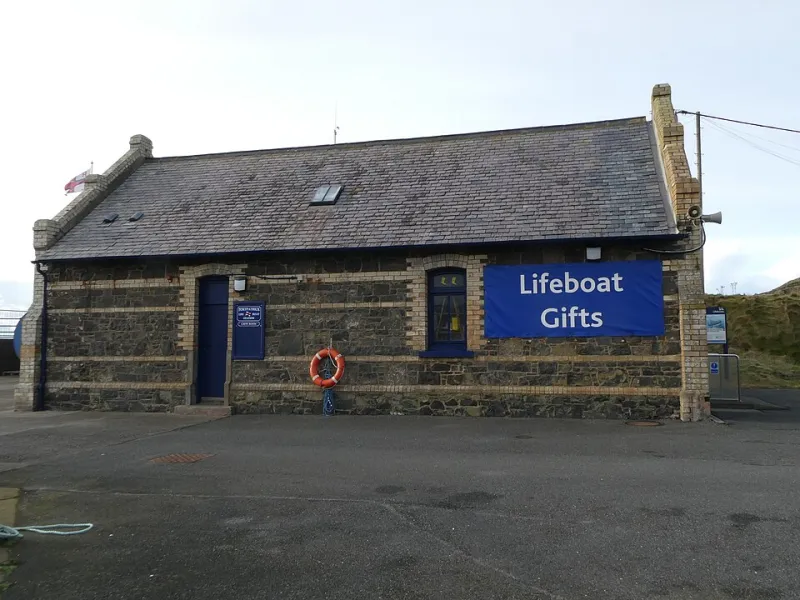
Photo: Billy McCrorie , CC BY-SA 2.0, via Wikimedia Commons
The klaxon sounds at 2.40 on a February morning, and within ninety seconds the first of Whitby's volunteer crew members is pulling on boots in the boathouse corridor. Among them, half-dressed and half-awake, is a former Army corporal who served two tours overseas and now answers to a different kind of call-out entirely.
For the past eight months, she has been one of a small group of ex-service personnel training with the Royal National Lifeboat Institution on the North Yorkshire coast — a cohort that reflects a pattern the charity has observed quietly for years: veterans turn up at lifeboat stations in numbers far greater than their share of the population might suggest.
Why the Lifeboats Call to Those Who Have Served
Ask the trainees why they joined, and the answers circle back to the same handful of themes. Structure. Purpose. A crew that depends on you. The RNLI asks for something that many veterans describe as missing from civilian life: the certainty that when the pager goes, what you do in the next ten minutes genuinely matters.
"In the Forces, you're part of something with a clear job," says one former Royal Engineer, now a trainee helm. "You leave, and you spend years looking for that feeling again. The lifeboat station is the first place I found it."
The fit is not accidental. The discipline of service — drill, drills, and more drills — maps neatly onto lifeboat training. Capsizing procedures rehearsed until they are muscle memory. Radio protocols learned by rote. Kit checked and re-checked. Veterans arrive already fluent in the language of preparation, and the RNLI's training regime rewards that fluency.
A Season of Cold Water and Steeper Learning
The training year at Whitby does not pause for the weather. Winter is, in fact, when the North Sea teaches its most useful lessons. Trainees describe Saturday mornings spent in the station's pool for capsize drills, then afternoons in the swell off the harbour mouth, learning how the Shannon-class all-weather lifeboat behaves in conditions most people would pay to avoid.
The curriculum is demanding by design. Navigation, seamanship, first aid, casualty care, towage — each module stacked on the last, assessed by RNLI trainers who travel the coast ensuring that a crew member in Whitby meets the same standard as one in Cornwall or the Hebrides.
For veterans carrying physical or psychological wounds, the pathway is not without its hurdles. Several of the trainees speak candidly about managing hearing loss, joint injuries or the after-effects of operational service. The RNLI's medical assessment process is rigorous, but those who spoke to us describe a culture of adaptation rather than exclusion — roles adjusted, responsibilities shared, the mission unchanged.
"The sea doesn't care about your past," one trainee observes. "It only cares whether you're competent on the day. There's something honest in that."
What the Institution Gains — and What the Veterans Do
Lifeboat stations along the Yorkshire coast have long benefited from the presence of former service personnel, and station leaders are pragmatic about why. Veterans tend to arrive with an instinct for command structures, an ease with hierarchy that is earned rather than assumed, and — critically — a comfort with risk that has already been tested.
But the exchange runs in both directions. For the veterans themselves, the lifeboat service offers something that few civilian pursuits can: a role in which their hardest-learned skills are not merely tolerated but needed. The ability to stay calm while others panic. To follow a plan when the plan is failing. To be tired, cold and afraid, and carry on regardless.
One former medic, who left the Army after twenty years, puts it plainly: "I spent my career learning to keep people alive in awful conditions. Out there, I get to use every hour of it."
Research into veteran transition has repeatedly highlighted the danger of the long, quiet months after discharge — the loss of identity, the drift, the isolation that can harden into something worse. Volunteering is not a cure, the trainees are careful to say. But it is a structure, and structure is where recovery begins.
The Mission Stays Constant; Only the Uniform Changes
There is a phrase repeated around the boathouse, half-joking and wholly sincere: the job hasn't changed, only the uniform. Where once they stood to for their country, they now stand ready for anyone in trouble off this coast — the fisherman, the sailor, the child swept out on an inflatable.
When the training season ends and the final assessments are signed off, the newest crew members of Whitby will take their places on the slipway, pagers on their belts, ready for the two-minute launch that has been the RNLI's promise to the coast since 1824.
For those who want to support the training of volunteer crews — many of whom, like these veterans, give their time entirely unpaid — the RNLI's fundraising efforts remain open year-round. And for any veteran reading this who has felt the pull of purpose since putting away the uniform, the boathouses of Britain's coastline appear to have a simple message: there is room in the crew.
The sea, as they say in Whitby, does not take nights off. Neither, it seems, do those who have served.